Skip to content

Commercial Septic Systems in Shelby, NC

Level IV certified for every onsite wastewater system North Carolina permits, with no flow limit.

What commercial septic actually means

Commercial septic is the design, permitting, installation, and upkeep of onsite wastewater systems for businesses, churches, developments, and any property whose daily flow is too large for a standard residential system. We do that work across Shelby, Cleveland County, and the surrounding North Carolina counties.

North Carolina certifies septic installers by grade level. Level IV is the highest grade the state issues, and it is what the law requires for systems over 1,500 gallons per day, for pretreatment components, for pressure and drip dispersal, and for industrial process wastewater. Shelby Septic Services is certified at Level IV under certification number 11527.

Most septic contractors in this area are certified at a lower grade, which limits the systems they are legally allowed to install. That is the practical difference. If your project needs a large or engineered system, there is a short list of contractors who can build it, and we are on it.
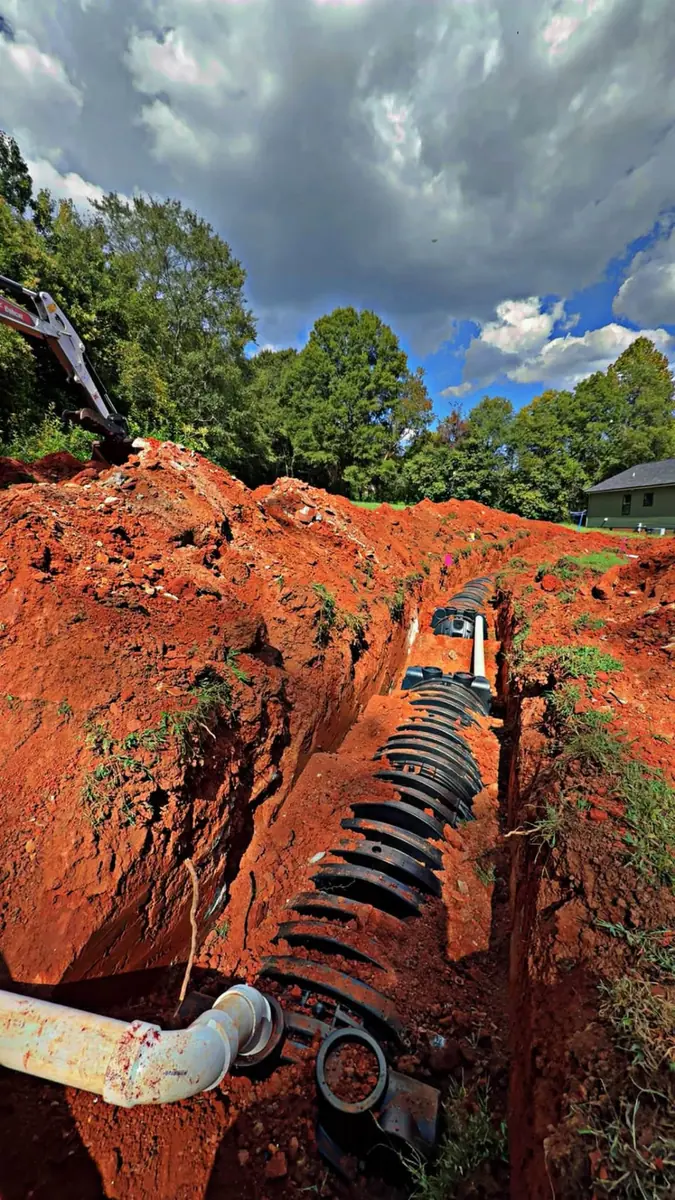
Large septic tanks set in an excavated trench during a commercial septic installation in Cleveland County, NC

What a Level IV certification lets us install

Level IV covers every onsite wastewater system type permitted in North Carolina. These are the categories that most often put a commercial project out of reach for a lower grade contractor.

Systems over 1,500 gallons per day

1,500 gallons per day is the line where a septic system stops being residential in the eyes of the state. Above it, North Carolina requires a Level IV certified installer. We are certified at that level, so there is no flow ceiling on what we can install.

Advanced pretreatment systems

TS-I and TS-II treatment systems and residential wastewater treatment systems, installed and set to the engineered design. These are the systems used when soils are tight, the site is small, or the county requires treated effluent before dispersal.

Drip and low pressure dispersal

Drip dispersal and low pressure pipe fields spread effluent slowly across a larger area, which is often the only way to make a difficult commercial site work. Both require Level IV certification to install in North Carolina.

Dual pump and lift station work

Dual pump and dual siphon dosing systems, flow equalization, and groundwater lowering with pumps. Redundancy matters on a commercial site because a single pump failure should never close a business for the day.

Properties we build commercial systems for

If the property is outside sewer service and the building serves the public or houses more than a single family, it usually needs a commercial or large flow system.

  • Restaurants and commercial kitchens
  • Churches and event venues
  • Retail centers and office parks
  • Campgrounds and RV parks
  • Multi-family and residential developments
  • Manufacturing and industrial process wastewater
  • Schools, daycares, and community buildings
  • Rural medical and veterinary offices

How a commercial septic project runs

  1. 1

    Site walk and flow review

    We start with the property and the intended use. Daily design flow drives the entire system, and it is calculated from the building's use, fixture count, and occupancy, not from a guess.

  2. 2

    Soil evaluation and engineering

    We coordinate with a licensed soil scientist and, where the system requires it, a professional engineer. Commercial systems over certain thresholds require engineered plans before the county will permit them.

  3. 3

    County and state permitting

    We handle the improvement permit and construction authorization with the county health department and keep the plan set moving. Permitting is usually the longest part of a commercial septic project.

  4. 4

    Installation to the approved design

    Tanks, pumps, controls, and dispersal field installed to the permitted plan. We build it the way it is drawn because that is what the final inspection is checked against.

  5. 5

    Startup, inspection, and handoff

    We start the system, verify the controls and alarms, walk the final inspection with the county, and show whoever manages the property what to watch and when to service it.

Why contractors and property owners call us

  • Level IV certified, so there is no system type or flow rate we have to turn down.
  • We coordinate directly with the soil scientist, the engineer, and the county so the plan set and the build match.
  • You get a straight schedule that separates permitting time from construction time.
  • The same people who install the system service it afterward.
See All Septic Services We Offer

Commercial Septic Questions

What makes a septic system commercial in North Carolina?

Design flow, not the building type. Once a system is designed for more than 1,500 gallons per day, North Carolina classifies it as a large system and requires a Level IV certified installer. Many restaurants, churches, and office buildings cross that line.

Do you need a Level IV certification to install a commercial septic system?

Yes. North Carolina certifies onsite wastewater contractors by grade level, and Level IV is the highest. It is required for systems over 1,500 gallons per day, pretreatment components, drip dispersal, dual pump systems, and industrial process wastewater.

Does a commercial septic system need an engineer?

Often, yes. Larger systems and any system using pretreatment or pressure dispersal generally require engineered plans before the county will issue a permit. We coordinate with the soil scientist and engineer so the plan set and the installation match.

How long does a commercial septic installation take?

The dig is rarely the long part. Soil evaluation, engineering, and county permitting usually take the bulk of the schedule, and installation follows once the permit is issued. We give you a realistic window for both before you commit.

Do you service and maintain commercial septic systems?

Yes. Commercial systems need scheduled pumping, and pretreatment systems have required operation and maintenance intervals. We pump, service, and repair the systems we install and systems installed by others.

Planning a commercial septic project?

Call (980) 254-7828 and talk through the site, the flow, and the timeline before you commit to anything.

Call (980) 254-7828